I remember being six years old and asking my mom what smile wrinkles were as we sat on the couch together.
She was reading aloud to me and my sister, an adventure about a girl with a sketchbook and a grumpy uncle and wild stagecoach ride. One of the characters was described as having “smile wrinkles.”
“What are those?” I tilted my head to the side so that my wispy blond curls fell in front of my forehead.
Mama told me that smile wrinkles were the little lines that crinkled around
people’s eyes because they smiled so much in their life. She smiled at me then, beautiful and warm. It looked like summertime and snuggles on the couch and singing Psalms at the kitchen table.
I decided then and there that I would smile as much as I could so that I would have smile wrinkles when I got older, just like Mama. That seemed like a very long time in the future, as I grinned ferociously at the living room wall. But years later, when people tell me how often I smile, I think that I may have a good chance of my six-year-old dream coming true.
People say that the older you get, the more you realize how human your parents are. What they don’t always tell you is that you might also realize how brave and beautiful they were as they lived their side of your earliest memories.
That the stories and kisses and lullabies were acts of battle, fighting for our little hearts in a world so adversarial.
I didn’t know then how very brave a smile could be.
My mama comes from a family of loggers and baseball players and gardeners. From mornings that started before the sun with strong cups of coffee and from riding horses on the beach, smiling at the way the waves danced and the redwoods clapped their hands and the salt air blew over her face. She is from a little white church in Fieldbrook, California, and the Sunday school songs that took root in her heart and bore seed a hundredfold.
I sometimes imagine what it was like for her to be in high school, falling in love with my dad (my grandpa said he swore like a sailor back then) and dreaming of her own little home with a white picket fence and kids who loved life and Jesus, just like she did.
Instead of a white picket fence, Mama got a call to a gypsy life when God transformed my dad’s heart and called him to a ministry that would move us to a different place every few years. Dad says he can still remember the exact moment as he sat in the cold garage for a Bible study he didn’t want to be at and realized that everything he’d heard about the gospel was true. Mama said that he couldn’t put down his bible, reading it like it was oxygen.
We sold our house and moved into a single-wide trailer on my great grandparent’s property, so Dad could go to Bible school. We were there for three years, a pattern that would become as normal as the changing seasons as we moved from place to place, following God’s call from one small church congregation who needed a pastor to the next.
We probably weren’t what Mama expected either. Three girls, two that she carried in her womb, one that she carried in her heart until she could finally embrace her in her arms in Sofia, Bulgaria and bring her home.
I sure didn’t make it easy for her, with my Cystic Fibrosis diagnosis and my fear of the doctors and treatments that became a routine part of our life. I can
think of no better mother to hold me on her lap through all those frightening “firsts” and to fight for me again and again, determined to help me thrive.
To all these invitations to let go of her dreams and follow new ones, she responded with one brave, breathtaking word: “Yes.”
And this was the word she entrusted to us kids, planting it in our lives like a seed that grew and rambled all over the landscape of our hearts.
Yes, we will follow Jesus again. Yes, loving is hard and yes, my heart is aching too, but we keep on loving. Yes, we will make it through this storm. Yes, we will turn our eyes to the light, and we will sing in the kitchen, and we will make beautiful things. Yes, Jesus loves you. Yes, we will go to Him and yes, He will come to us.
I didn’t realize then that there might be times when even the best of mother’s couldn’t smile. When the weight of a long weariness, the sadness of change, and the floundering of health would drain the smiles from my family. Like a garden, pelted by constant rains until the arbors begin to sag and the water makes muddy rivulets in the garden paths. Perhaps the worst part of
such a season is that a garden cannot provide a place of peace and beauty for others in the same way it used to, until the gentle promise of spring begins to soak into its winter-weary bones and bring it back to life.
The winter I was 16 felt especially dark. I was in and out of specialists’ offices, hoping for answers, Mama was often exhausted and discouraged, and a raincloud rested above our little family that showed no signs of letting up. I began to wonder what a real smile felt like, and what it would sound like to hear Mama’s laugh and Dad’s spontaneous singing again.
Saying “yes” took on a new flavor: the bitter sting of saying “yes” to weakness and continuing to put one foot in front of the other along a broken path.
During that time, I found that the stories and love were still there, still beating alongside my heart as I pushed my sister on what we called “the dream swing” and as we rambled around our backyard, playing pirates and princesses and ninjas.
The songs that Mama taught us when we were little, I now whispered to myself when I couldn’t sleep at night and sang to the little ones I babysat every week. The light I couldn’t see yet still cradled me, even as I desperately longed for Spring to come and to be able to spin barefoot in a garden that we planted, under the warm sun that causes fallow ground to burst with new life.
The thing about spring is that it always does come. The birds warm up their voices, little blue flowers spring up all around the creek, and the light trickles back in like sunshine through a crack in a secret garden wall.
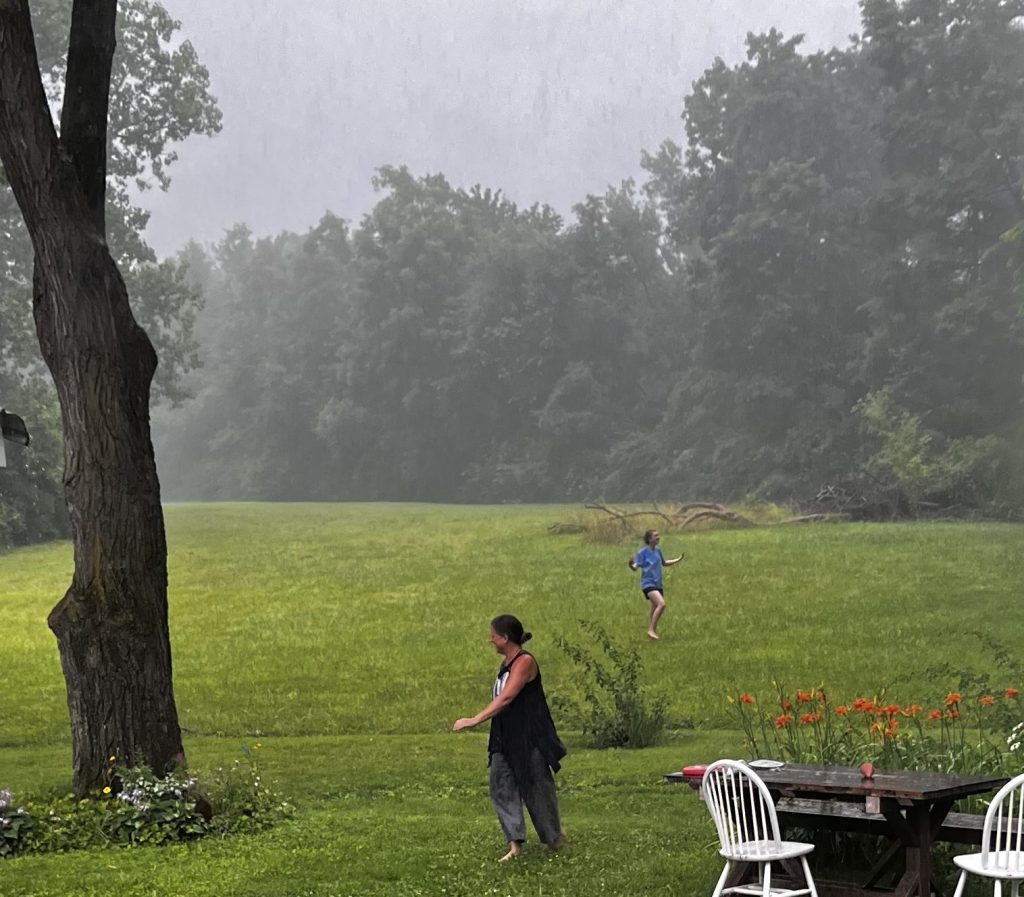
We watched many springs come, Mama and I. Planting seeds in our garden, spinning stories by the bonfire, running through a rain-soaked field in bare feet. Singing songs that made us cry, and, in the aftermath of the tears and the hugs, smiling.
On one of these tear-washed days, Mama turned to me and repeated Colin’s quote from The Secret Garden, when he had finally caught ahold of a hope he didn’t yet fully understand: “I shall get well again, and I shall live forever and ever.”
I hugged Mama tight, in the same way she used to hug me whenever I was scared, or sad, or lonely. The raindrops danced on the window, and I wondered if it could really be true. That we would get well again, despite the pain of church hurt, the loneliness of saying goodbye, the weariness of troubled health and troubled hearts. That the same One who sang each spring into being, would sing our hearts into wholeness and that, through Him, we would indeed live forever and ever.
Mama smiled at me then. It still felt like summertime and snuggles on the couch and singing psalms at the kitchen table. Except now, it was more. Now it was a smile that stared darkness in the face and still chose to shine, weathered by the wind, but still alive. Still saying “yes.”
I always loved smile wrinkles, but I didn’t always know that they told a story. A story of perseverance and courage, of light that is stronger than darkness, and spring that comes after winter. Now I know that my mother’s smiles aren’t just warm and beautiful, they are brave. One of the bravest things I know.
This Creative Nonfiction Essay originally published in Thin Space, the Art and Theology Journal of Moody Bible Institute.


Leave a comment